
How Freedom Tech Is Pushing Back Against Digital Authoritarianism

“How Freedom Tech Is Pushing Back Against Digital Authoritarianism“ Forbes, 4 June 2026
Around the world, governments and corporations are expanding tools of digital control, from facial recognition and biometric surveillance to mandatory digital IDs and debanking.
Law and policy are normalizing more of this infrastructure. In the UK, that includes the Online Safety Act and age verification rules. Elsewhere, it includes social media age restrictions in Australia and Malaysia, Europe’s digital identity wallet, India’s Aadhaar system and preparations for central bank digital currencies.

Under the banner of regulatory safety, institutions demand Know Your Customer or KYC compliance, forcing citizens to surrender personal data to centralized databases. These databases are routinely breached, with customer data leaked, traded or sold on the dark web. Once identity, location and financial data are exposed, people can be profiled, extorted or physically targeted.
In France, attacks targeting crypto executives, entrepreneurs and their families have shown how quickly personal data and public visibility can become a security risk. Once identity, location and financial information are exposed, people can be profiled, pressured or physically targeted.
How do people communicate, organize, move and receive money when states, institutions or platforms can monitor, restrict or cut them off?
Resilient Communication Under Authoritarian Rule
Farida Nabourema’s experience demonstrates why resilient communication is vital under authoritarian rule. The Togolese activist began organizing as a teenager after her father was arrested and tortured, and later helped lead protests against a dictatorship that responded with arrests, exile, intimidation and internet shutdowns.
During uprisings in Togo, she said authorities shut down the internet, phone networks and even electricity. “You have no idea how traumatizing it is when you are in the middle of a protest and they shut down the internet,” she said. “You can’t call anyone. You can’t talk to anyone. You can’t communicate with anyone.”
Bitchat offers one answer to that problem by using Bluetooth mesh networking, allowing nearby phones to pass messages between one another without internet, mobile service, phone numbers, accounts or central servers. Farida described it as one of the most important freedom tech tools for the cause she has been fighting for, because it helps people stay connected when a government tries to cut them off. “It’s very useful in such situations where our government thinks they can just shut down the connection and automatically you are blacked out,” she said. “It’s a game changer.”
Citizen Lab’s work shows how digital surveillance turns personal devices into tools of political control. Its researchers investigate spyware, phishing and digital attacks used against journalists, activists, dissidents and civil society.
Siena Anstis, senior legal advisor and co-lead on transnational repression at Citizen Lab, warned that legal safeguards have not caught up with the technology. Spyware goes far beyond a wiretap, giving access to a phone’s activity, history and surrounding network.
Pegasus is one of the most notorious examples. Developed by Israel’s NSO Group, it can turn a phone into a surveillance device. John Scott-Railton, senior researcher at Citizen Lab, described it as “a weapon with infinite range,” allowing states to export fear across borders without sending agents into another country. He also warned that “companies’ incentives, for the most part, misalign with your personal privacy.”
Citizen Lab turns that research into practical steps. High risk Apple users should consider Lockdown Mode, while Security Planner gives free, personalized advice based on a person’s devices and risks. John also pointed activists, dissidents and journalists to cybersecurity helplines such as Access Now, warning that people facing serious digital threats should not navigate them alone.
Financial Privacy And Unstoppable Funding
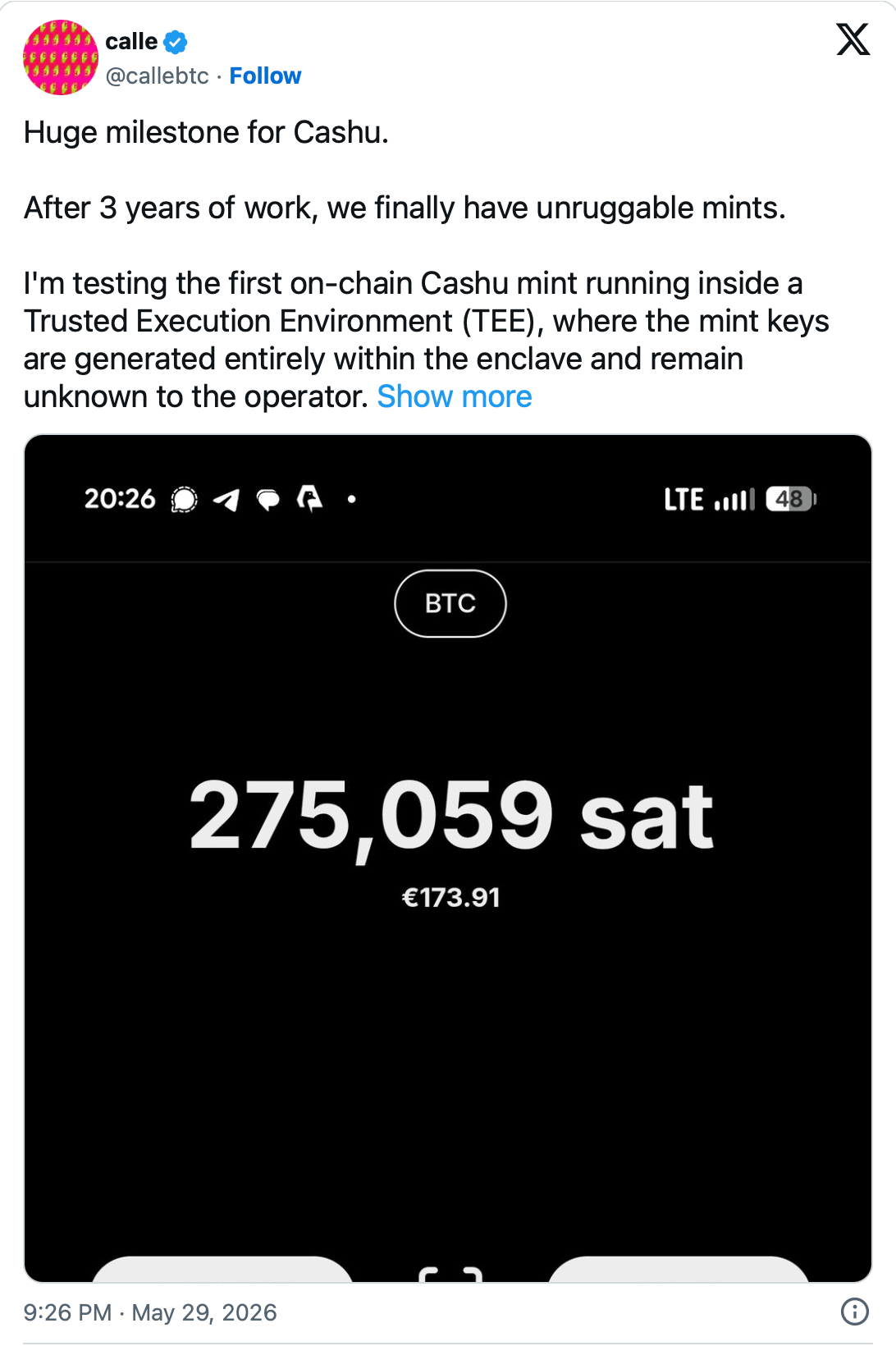
The developer behind Cashu, known publicly as Calle, is working on the financial privacy layer of freedom tech. His work focuses on a basic problem with the modern internet. Without a proper micropayments system, online business models became dependent on advertising, and advertising became dependent on tracking.
“Most surveillance systems that people are subject to today are there to sell you better advertisements,” he said. “The reason why advertisement was necessary from the 1990s on was because of the lack of a proper micropayment system on the internet.”
Cashu brings older cypherpunk ideas around Chaumian ecash back to bitcoin. The aim is to support digital bearer money that can move online instantly, with almost no fees and privacy closer to that of physical cash. For Calle, this is part of a fundamental question about whether the internet remains a place where people can transact freely, or becomes an environment of total digital control.
Without privacy preserving tools, Calle warned, “you do not need a very strong imagination to see what a world of total digital control over information, communication and finances would look like.”
Calle’s work aims to make digital cash more private and less dependent on trusted intermediaries.
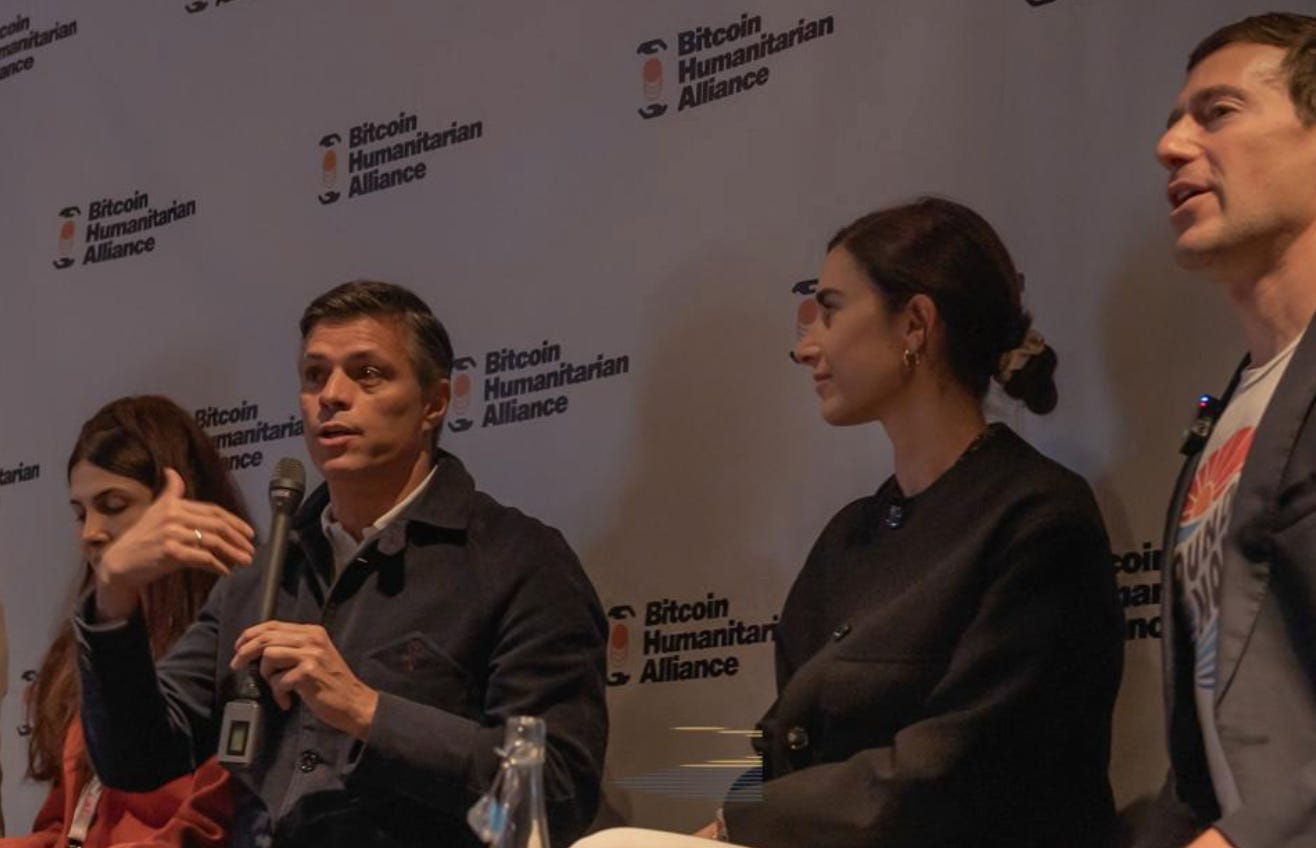
Leopoldo López focuses on one of the hardest problems facing dissidents and humanitarian movements, getting resources to the people who need them. The Venezuelan opposition leader and co-founder of World Liberty Congress spent years as a political prisoner before going into exile, and said regimes often control civil society by weaponizing bank accounts, donors and recipients.
“In my home country, Venezuela, we have been banned from the financial system for years,” Leopoldo said. “Regimes taking control of the financial system, to take control of civil society.”
His answer is Agora, a peer to peer donation protocol designed to connect donors directly with activists, political prisoners, humanitarian projects and grassroots movements. Leopoldo described it as “GoFundMe without borders,” built to reduce intermediaries, fees and gatekeepers.
The design applies Bitcoin’s open source, peer to peer ethos to humanitarian funding. Agora runs on Nostr, giving it a decentralized communications layer, while Bitcoin allows value to move directly between donor and recipient. Leopoldo said the aim is to create “unstoppable funding,” connecting people to projects without relying on the financial systems authoritarian regimes can block.
Anna Chekhovich, who works with Alexei Navalny’s Anti Corruption Foundation and leads Bitcoin education at the Human Rights Foundation, sees freedom tech through the reality of financial repression. Navalny’s message of “don’t be afraid” remains central to her work.
In Russia, Anna said the banking system is fully controlled by the state and used to punish donors, activists and opposition movements. Many people in the West, she said, still do not understand “the concept that money is a weapon.”
Anna teaches activists how to use Bitcoin safely, emphasising privacy, self custody and non KYC tools, including peer to peer options such as Hodl Hodl. Tools alone are not enough, because activists also need practical education on custody, seed phrases, wallets, scams and how to avoid exposing the people they are trying to help.
Together, these tools point to the same conclusion. Freedom technology is becoming a practical response to systems that can monitor speech, restrict movement, freeze money, expose identity and cut communication.
Bitchat helps people communicate when the internet is shut down. Citizen Lab helps people understand and reduce the risks of spyware. Cashu gives private digital payments and Agora shows how open source, peer to peer infrastructure can move resources around institutional gatekeepers.
Anna’s work adds the final piece. Tools only protect people when they know how to use them safely. In a world moving toward digital control, the ability to communicate, transact and organize without permission may become the difference between resistance and silence.
According to the Freedom Tech track at the Oslo Freedom Forum, more than 6.2 billion people today live under authoritarian rule. In the West, the cost of digital control has not yet been felt in the same way, which may be why the need for these tools is still underestimated. The direction of travel is harder to ignore. If governments and institutions keep building systems that monitor, restrict, expose and control, grassroots solutions like these will become a lifeline.